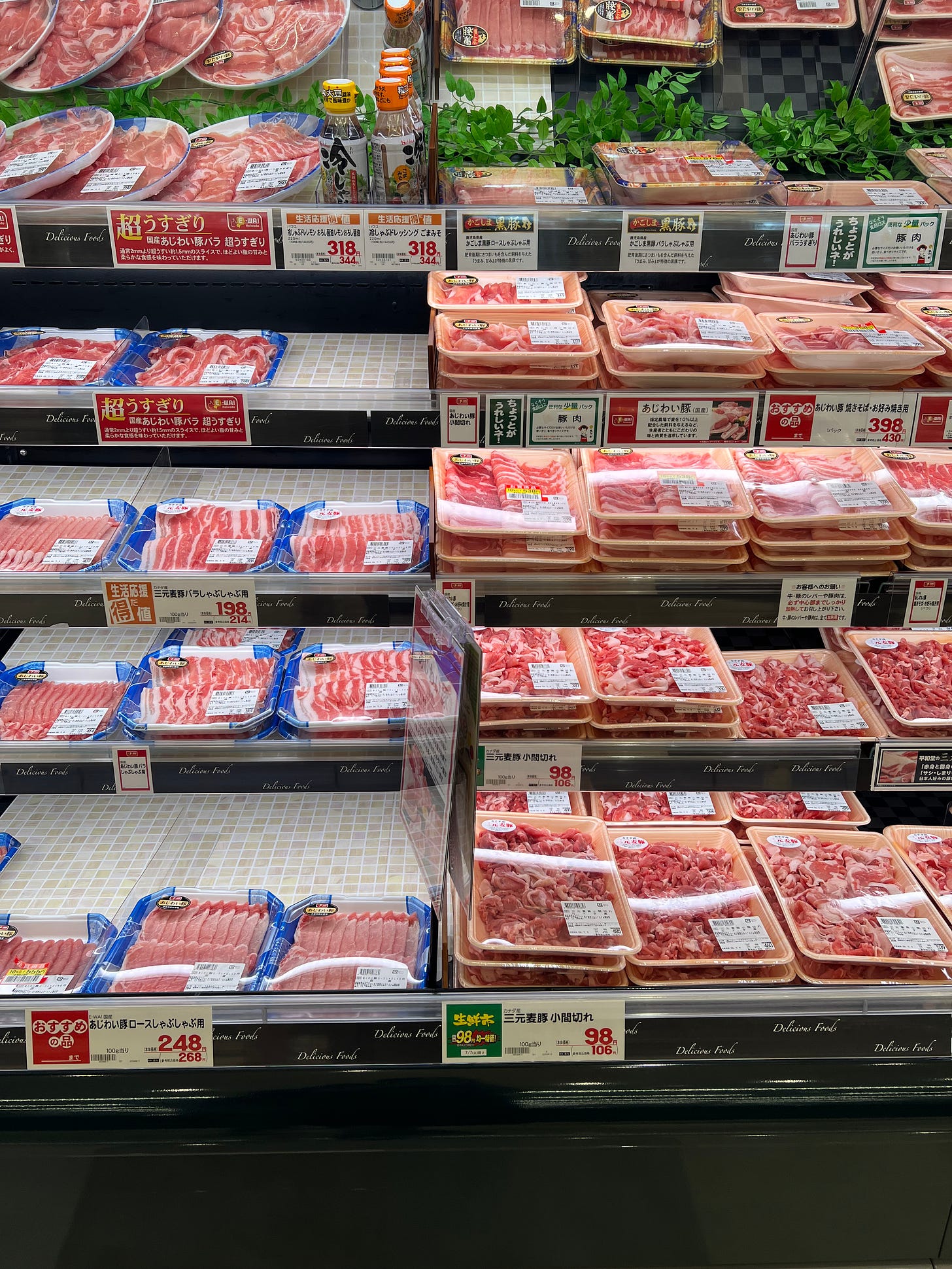
Moving to Berlin, my first real wave of despair hit when I realized one thing: the concept of “thinly sliced meat” simply does not exist in this city. Not even by a millimeter. Coco here!
Back in Japan, you can toss trays of razor-thin sliced meat into your basket at the supermarket without giving it a second thought. But over here? The first time I asked the butcher to slice my meat “thin,” he handed me a massive one-centimeter slab of pork with a straight face. I stood there speechless. Between what locals here consider “thin” and the delicate 1mm whisper of meat required for Japanese hot pots and ginger pork, there is a gulf as deep as the Atlantic Ocean.
After suffering through multiple ruined meals, I finally learned the one working workaround: asking the butcher to slice it “as thin as ham” (So dünn wie Schinken, bitte!). Mind you, to them, you are now officially the most annoying customer of the day, so expect a glaring eye-roll. At that point, your options are limited: charm a grumpy German butcher, accept your fate and slice it yourself at home, or buy a terrifyingly sharp meat slicer that will leave you fearing for your fingers every time you wash it. Getting a decent Japanese meal in Berlin requires that level of commitment.
The Borderline Obsessive Art of Japanese Meat Cuts
When you think about it, the meat counter at a Japanese supermarket is borderline chaotic. The precision with which meat is categorized by the millimeter according to its exact cooking method is almost unbelievable.
For Shabu-Shabu (under 1mm): Paper-thin slices that melt into broth the instant they touch hot water.
For Sukiyaki (1.5mm–2mm): The sweet spot—thin enough to soak up the sweet-savory sauce, yet thick enough to hold its texture.
Thinly Sliced / Standard (2mm–3mm): Today’s star. The ideal thickness for clinging onto rich ginger sauce.
For Yakiniku (3mm–5mm): Cut just thick enough to sear quickly over high heat.
Komagire (Odds and Ends): Mismatched, uneven scraps that aren’t pretty, but single-handedly save our weeknight dinners.
Why are Japanese people so ridiculously obsessed with thinness? The answer is simple: we eat with chopsticks. Unlike Western dining where you sit down with a knife and fork to saw through a piece of meat on your plate, Japanese food requires meat you can pick up cleanly with chopsticks and pop into your mouth in a single bite. That is the absolute rule of our dinner tables.
Slicing 2mm Meat is Surprisingly Therapeutic
After feeling completely hopeless about the meat situation, my partner Kiki stepped in and taught me the art of homemade meat slicing. Now, we happily enjoy properly thin slices right here in our Berlin apartment.
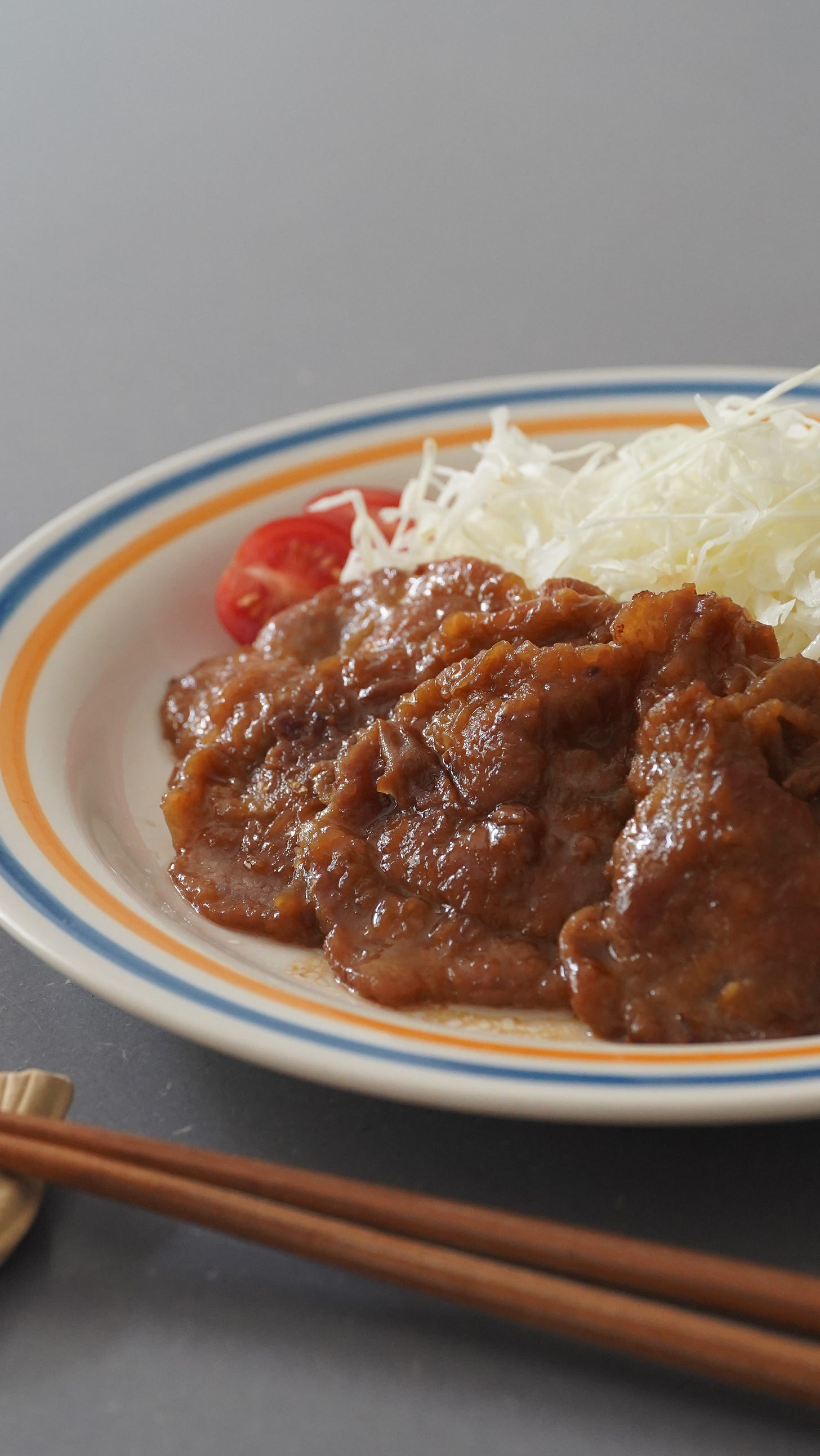
Today’s recipe, Pork Shogayaki (Japanese Ginger Pork), is the ultimate comfort food—practically encoded in every Japanese person’s DNA.
Growing up, my mother always made it with the cheapest komagire pork scraps, bulking it up with a mountain of sliced onions to feed the family. But the version Kiki is sharing today is her “golden ratio” ginger pork, perfected after years of trial and error in her Berlin kitchen.
Her choice cut? Pork shoulder collar, sliced to that magical 2mm to 3mm mark to balance juicy fat with savory meat.
If you’re thinking, “There is no way I can slice meat that thin myself,” don’t panic. A 2mm cut is actually the most forgiving thickness for your very first attempt at butchering a block of meat at home.
A Sinful Affair: Glazed Pork over Steamed Rice
Thanks, Coco! I’ve got the baton. Welcome to our Digital Kitchen Classroom! Kiki here.
As Coco mentioned, cooking Japanese food abroad means learning how to tame local ingredients first. That extra step can be a hassle, but honestly, it’s also the most fun part of the process.
Turning a standard piece of pork shoulder from your local EDEKA into something that tastes straight out of a cozy Tokyo diner comes down to just two simple tricks:
Partially freeze your meat: Toss your block of pork into the freezer for 1 to 2 hours until the surface gets firm. Knife through it after that, and you’ll get effortless 2mm slices. It’s genuinely satisfying.
Dust with flour: Lightly coat the meat with a dusting of flour before it hits the pan. This locks in the juices so the pork stays soft, and gives the sweet, gingery sauce something to cling to aggressively.
Taking a slice of juicy, glaze-drenched pork and landing it briefly onto a bowl of freshly steamed rice before eating—that single bite instantly transforms a cold Berlin kitchen into a nostalgic Tokyo Teishoku eatery.
So, tie your aprons. Let’s make this ridiculously comforting, chopstick-friendly Ginger Pork together.
Ready?
Lesson10: The Ultimate Japanese Ginger Pork
Serves 4
This post is for paying subscribers only
Sign up now and upgrade your account to read the post and get access to the full library of posts for paying subscribers only.