Living in Berlin, the single biggest culture shock—and ongoing stress—is the fact that trains just... don’t show up.
Growing up in Japan, my brain still hasn’t fully processed this level of transit guesswork. Back home, trains arriving on time isn’t a miracle; it’s just Tuesday. If a train is delayed by even five minutes, they literally hand out official “delay certificates.” Looking back, that level of precision might be its own form of beautiful madness, but I miss it dearly.
Once, a friend’s dad asked me, “Is it true that Shinkansen bullet trains run every few minutes and never miss a second?” It was so second-nature to me that I froze for a second before answering. But it’s true: the Shinkansen runs around 383 trains a day, with average delays measured in mere seconds.
I’m actually planning a holiday trip from Berlin to the Netherlands this summer, and I’m already secretly terrified about whether Germany’s high-speed ICE train will actually stick to the schedule. Oh, how I long for Japan’s absurdly punctual timetables...
Thanks for reading Master the Art of Japanese Home Cooking! Subscribe for free to receive new posts and support my work.
The Ultimate Shinkansen Companion: Depachika Inari Sushi
Talking about the bullet train reminded me of my absolute favorite thing to eat on those rock-hard train seats. A bit of a leap? Maybe, but let me run with it.
Back when I lived in Japan, I worked for a startup. I lived near Osaka in Kansai, but our headquarters were in Tokyo. Every quarter, I’d hop on the Shinkansen for work trips. My secret reward after wrapping up a chaotic day was slipping into the Depachika at Tokyo Station before heading home.
If you’re unfamiliar, a Depachika is the vast, sprawling food hall located in the basement of Japanese department stores. Part culinary theme park, part food heaven, it’s packed with everything from centuries-old artisanal shops to the latest trendy sweets.
And out of all the stunning food on display, the one thing I never left without was Inari Sushi.
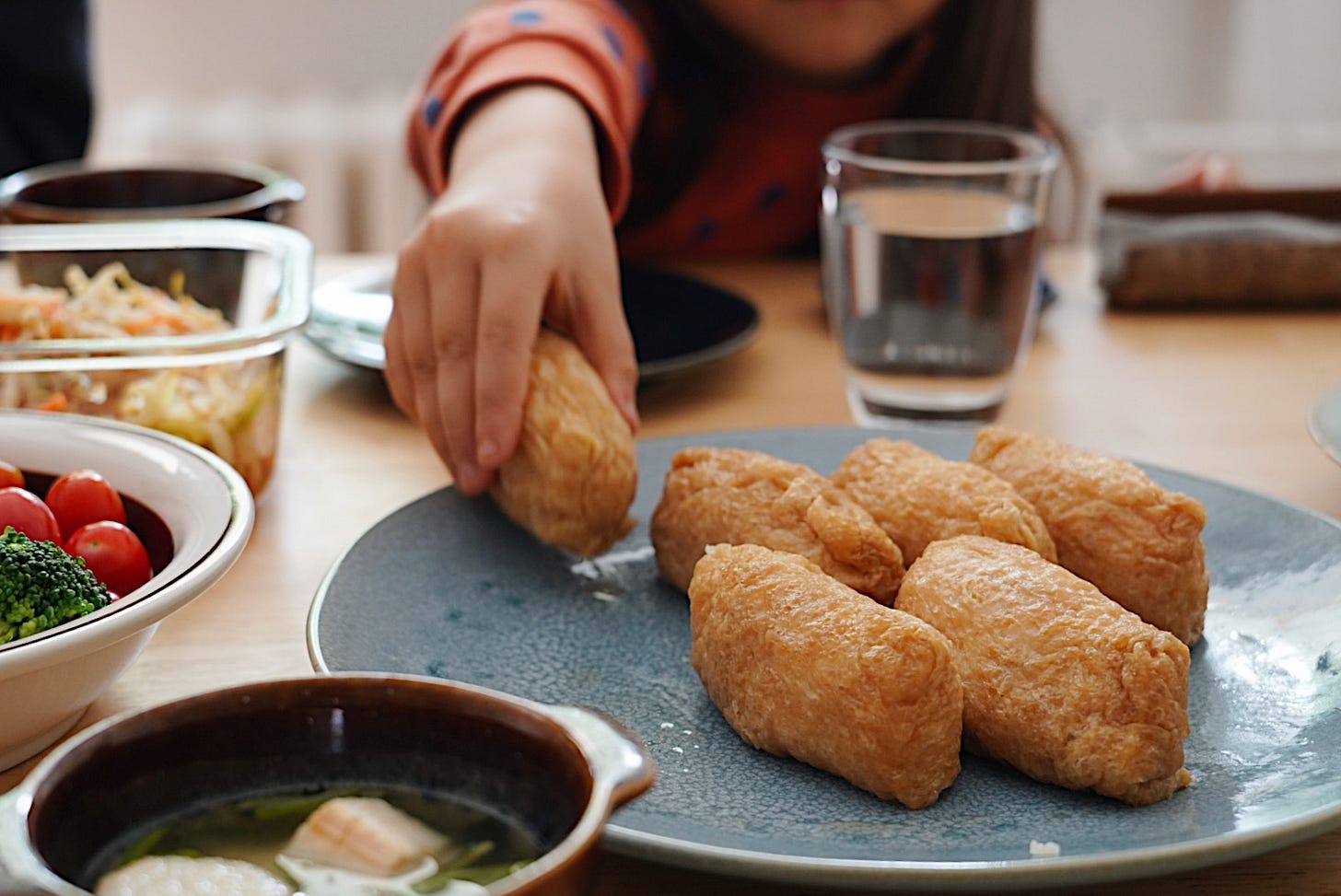
Inari sushi consists of sweet, savory seasoned fried tofu pockets stuffed with seasoned sushi rice. The tofu (aburaage) is traditionally said to be the favorite food of the foxes who serve the deity of agriculture. Unlike standard onigiri rice balls, it’s arguably the ultimate Japanese finger food.
Modern Inari and the “Triangle vs. Oval” Mystery
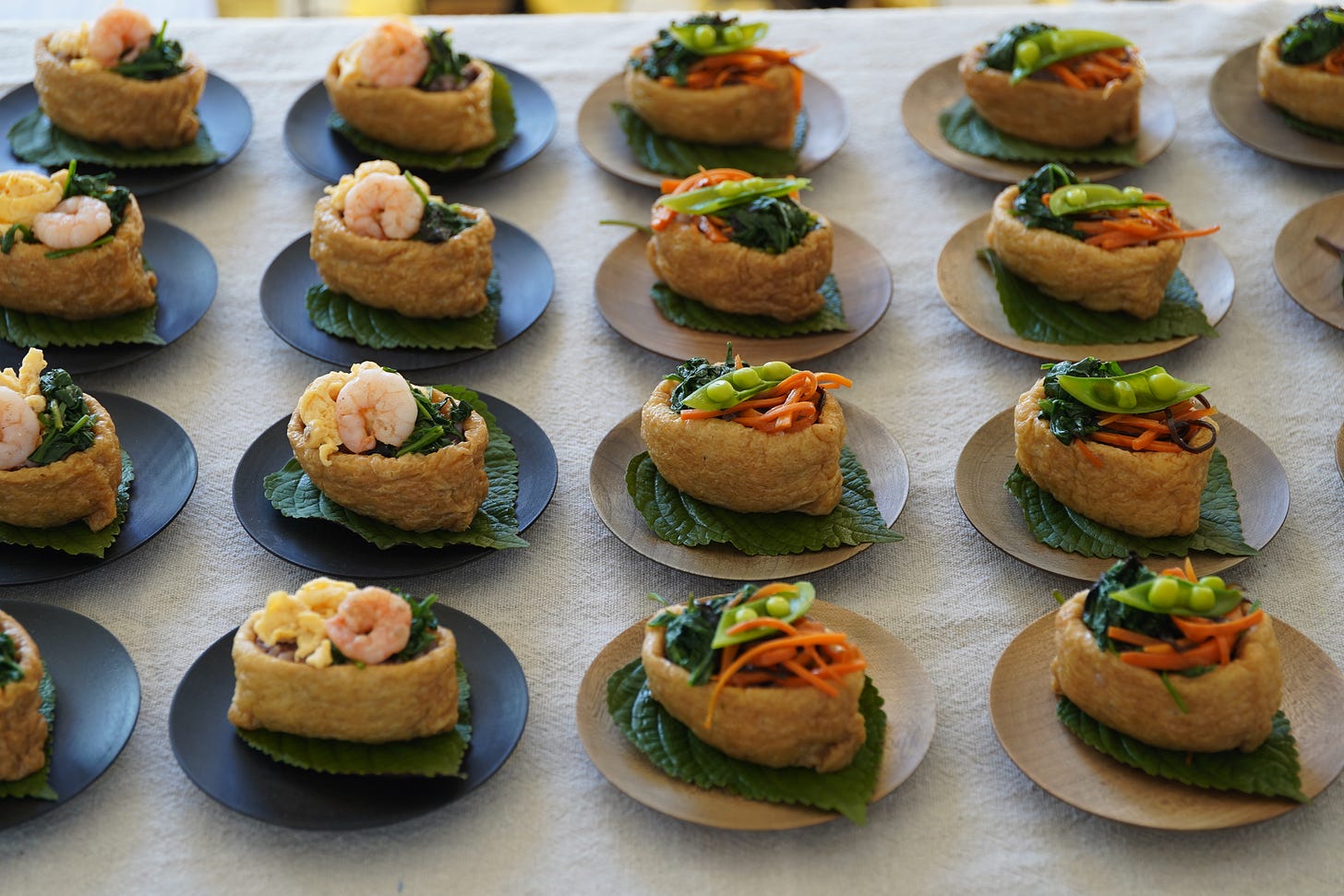
For most people in Japan, inari sushi brings up cozy memories of school sports days or casual family gatherings. But lately, it’s gotten a serious glow-up.
Take “Makeda,” a famous inari specialty shop—their lineup is practically art. From sharp wasabi-infused options to seasonal toppings, they offer beautiful, bite-sized pockets that are completely mess-free and odorless, making them the perfect discreet meal for a quiet train ride. If you ever ride the Shinkansen in Japan, definitely hunt down a box.
There’s also a fun regional detail to inari sushi: shape. In eastern Japan (Kanto), they’re usually rolled into neat oval shapes. In western Japan (Kansai), they’re folded into triangles meant to resemble fox ears. Growing up in Osaka, inari was always triangular to me, whereas Kiki, who comes from Niigata in the east, makes hers in cute little ovals.
The flavor and cultural split between eastern and western Japan is a rabbit hole for another day... so for now, let me hand the baton over to Kiki!
A Golden Bite from Our Berlin Kitchen
Thanks, Coco! I’ve got the baton. Welcome to our Digital Kitchen Classroom! Kiki here.
Listening to Coco talk about depachika makes me want to jump on a bullet train straight back to my hometown in Niigata. While I still spend way too much time waiting for missing trains here in Berlin, the good news is that we can recreate those nostalgic inari pockets right in our own kitchen.
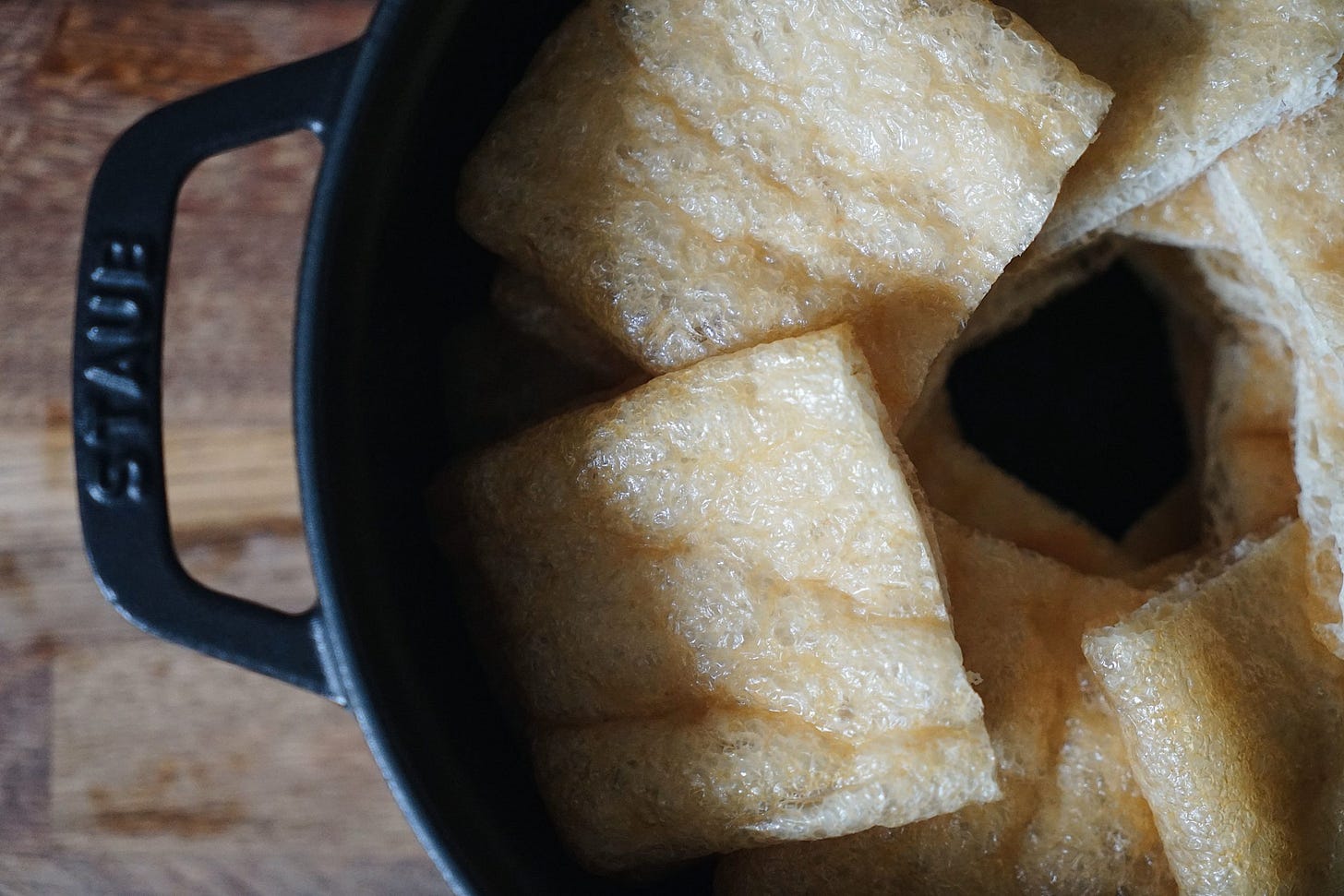
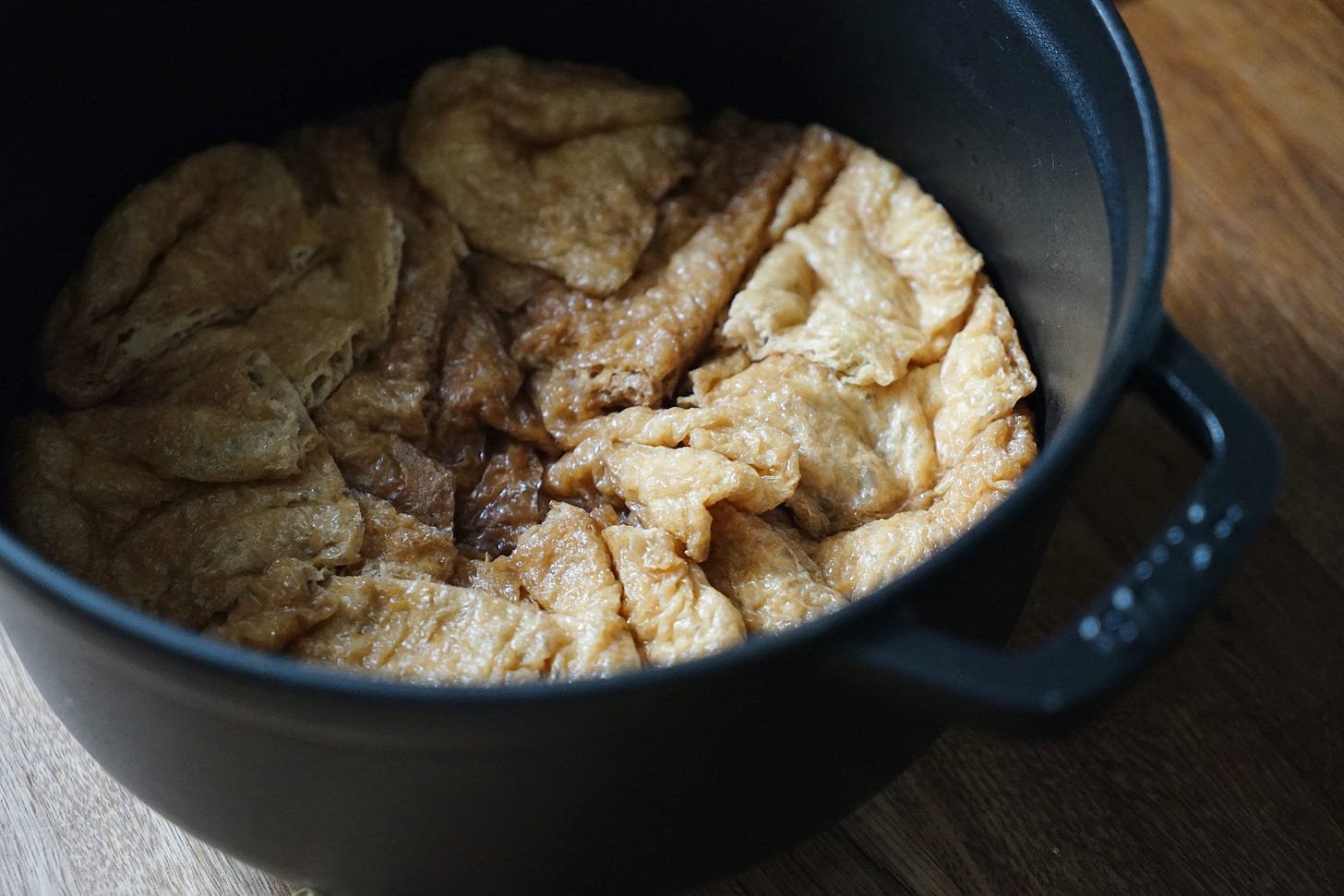
I’ve actually been obsessed with inari sushi since I was a kid. I grew up eating the super-sweet, store-bought pre-seasoned tofu pockets. But in my early twenties, I had homemade inari at a friend’s house and was completely blown away by how soft the tofu was and how delicate the flavor tasted. That was the moment I realized: Inari is SO much better when you simmer the tofu yourself.
Today’s recipe keeps that rich, juicy satisfaction of the classic version, but dials back the sugar in favor of a deeper, umami-rich flavor. I love making a big batch because you can actually freeze the seasoned tofu pockets and defrost them whenever craving strikes.
They’re naturally plant-based (vegan), and tossing a few herbs or toasted seeds into the sushi rice makes them look instantly festive—which is why they’re my go-to for hosting friends here in Berlin.
Tie your aprons, and let’s make this comforting golden finger food together.
Ready?
LESSON8:Our Signature Golden Inari Sushi.
Makes 24 pockets (Serves 4 to 6)
Ingredients
[ For the Seasoned Tofu Pockets ]
This post is for paying subscribers only
Sign up now and upgrade your account to read the post and get access to the full library of posts for paying subscribers only.