



From instant ramen to the Walkman that let us take music anywhere, all the way to the “Emoji” we rely on for everyday digital chats—Japan has always surprised the world by taking limited resources and elevating them through sheer craft and processing. It’s a country of inventive minds who, perhaps because of a historical lack of raw resources, became obsessed with studying the mundane details of daily life to spark something entirely new.
By the way, if you want a peek into this beautifully obsessive Japanese grit, you can check out Manpuku on Netflix, a drama following the real-life, mud-scraping struggles of the couple who invented instant ramen.
And it’s exactly this kind of inventive Japanese mindset that birthed one of the best culinary creations out there: today’s star, Coffee Jelly.
The Jun-kissa: Where Time Stands Still
“Instead of drinking coffee, why not eat it?” Honestly, who thinks of that? This quirky, genius concept truly flourished inside a uniquely Japanese space known as the Jun-kissa.
A jun-kissa is a traditional coffee shop that strictly doesn’t serve alcohol, focusing entirely on coffee, light bites, and desserts. Picture a dim room lit by warm amber lights, with vintage jazz spinning quietly in the background. It is a sanctuary—a place where people escape the chaotic noise of the everyday world just to sit back and finally exhale.
Back in the Taisho and Showa eras, these shops served as modern salons for the avant-garde cultural elite. Wanting to offer something chic and western but uniquely suited for a coffee house, the masters utilized gelatin—a rare ingredient at the time—to set their signature brew into a cold dessert. Eventually evolving to include a few drops of brandy or a pour of rich cream, it established itself as Japan’s ultimate “adult dessert.”
A Tiny Spoonful of Daily Relief
Originally invented as a quiet indulgence for adults, coffee jelly remains the ultimate form of relief for our busy modern lives.
Taking a quick pause between work or chores to scoop up a cold spoonful of this jelly feels different from your everyday mug of coffee. It’s a tiny, grounding ritual to treat yourself.
Its refined, bittersweet flavor gently untangles a tired mind. More than just a sweet treat, this Japanese invention is like a quiet drawer in your day where you get to put your thoughts back in order.
...and that’s where I’ll hand things over! From here on, Kiki is taking the lead to share the special recipe straight from our Berlin kitchen. Take it away, Kiki!
A Two-Layered Treat from Our Berlin Kitchen
Thanks, Coco! I’ve got the baton. Welcome to our Digital Kitchen Classroom! Kiki here.
The nostalgia of the jun-kissa Coco just described is so beautiful, isn’t it? Today’s recipe brings that retro charm into the modern day with a gorgeous, two-layered coffee jelly.
Making two separate layers might look a bit intimidating, but it actually requires barely any extra effort. Yet, the sense of reward when you see that beautiful contrast settled in your glass is unmatched.
The clean, sharp bitterness of the coffee layer meets the gentle sweetness of the milk layer, blending perfectly in your mouth. One bite will instantly transport you to a retro Tokyo coffee lounge.
I hope this brings a quiet, amber-lit jun-kissa vibe to your kitchen.
Tie your aprons, and let’s bring this inventive Japanese classic to life together.
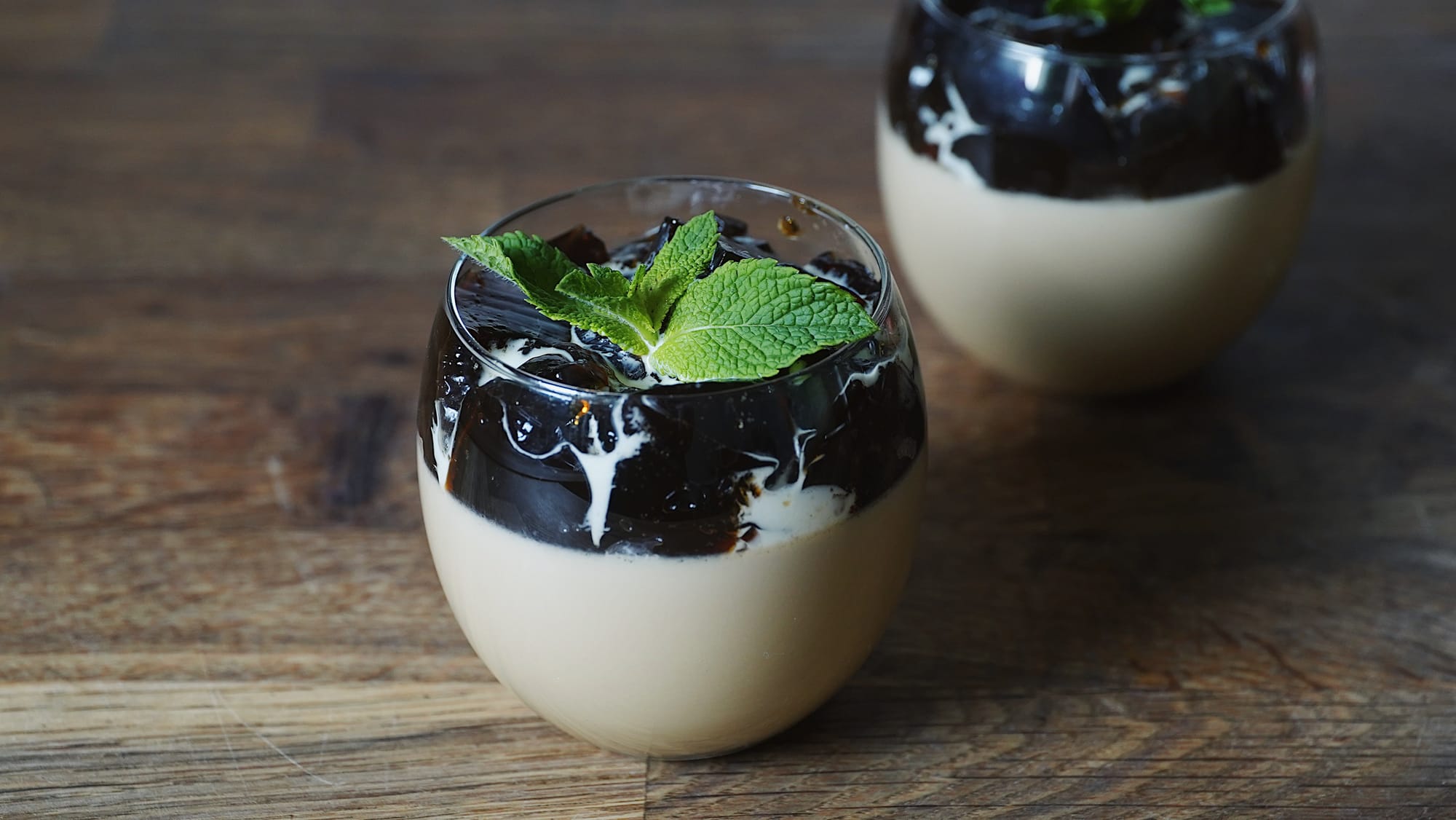
LESSON7:Our Signature Two-Layered Coffee Jelly
Serves 4
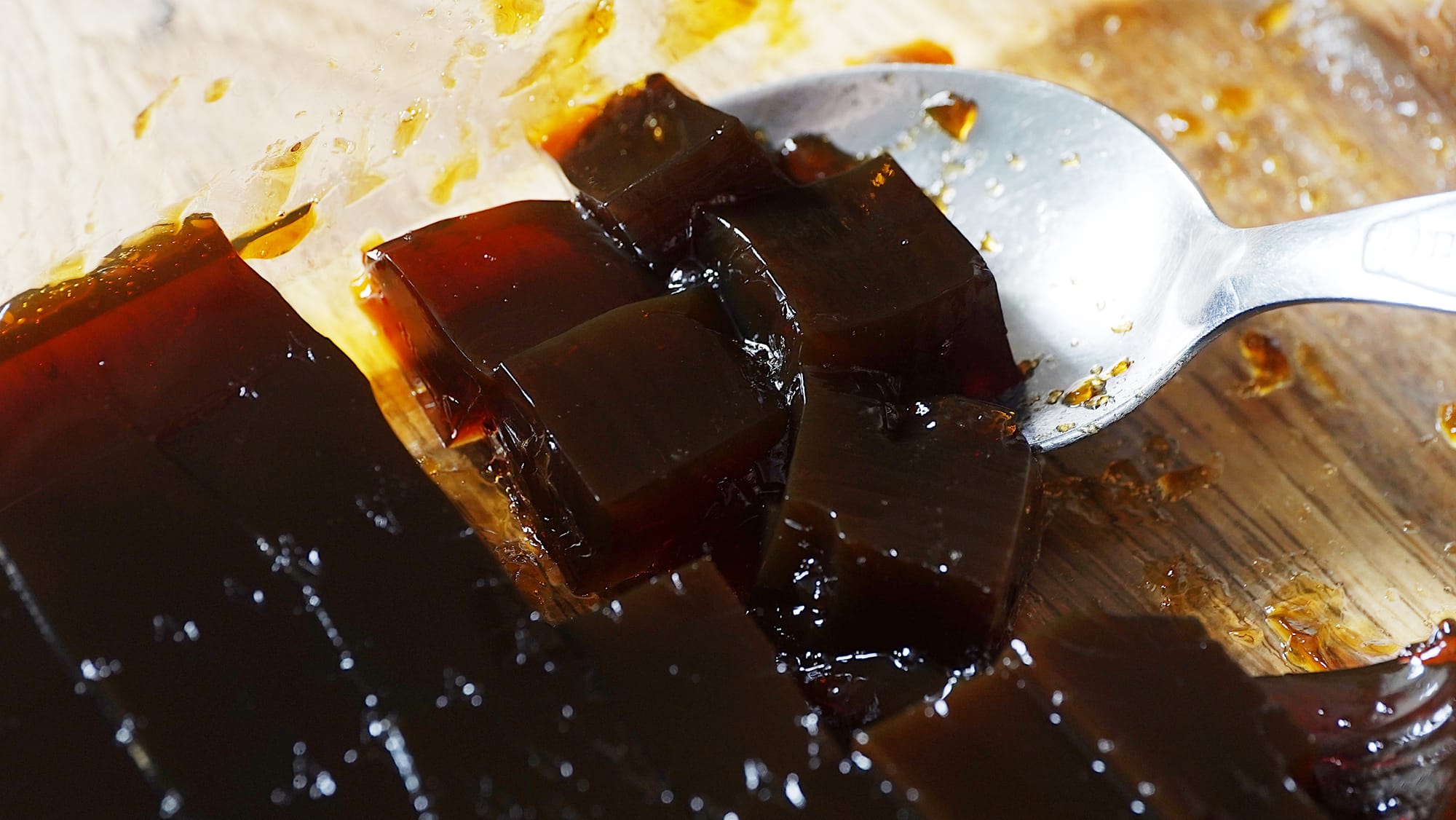
[ For the Coffee Jelly ]
- 500ml (17 fl oz) Brewed coffee
- 80g (2.8 oz) Cane sugar
- 10g (6 sheets) Gelatin sheets
[ For the Coffee Blancmange ]
- 450ml (15.2 fl oz) Heavy cream
- 200ml (6.8 fl oz) Brewed coffee (strong brew)
- 60g (2.1 oz) Cane sugar
- 9g (5 sheets) Gelatin sheets
1. Make the Coffee Jelly
- Bloom: Place the gelatin sheets in a bowl of cold water to soften.
- Dissolve: Brew your drip coffee, then immediately add the cane sugar and stir until completely dissolved.
- Mix: Squeeze the excess water from the softened gelatin sheets, add them to the hot sweetened coffee, and stir thoroughly until melted.
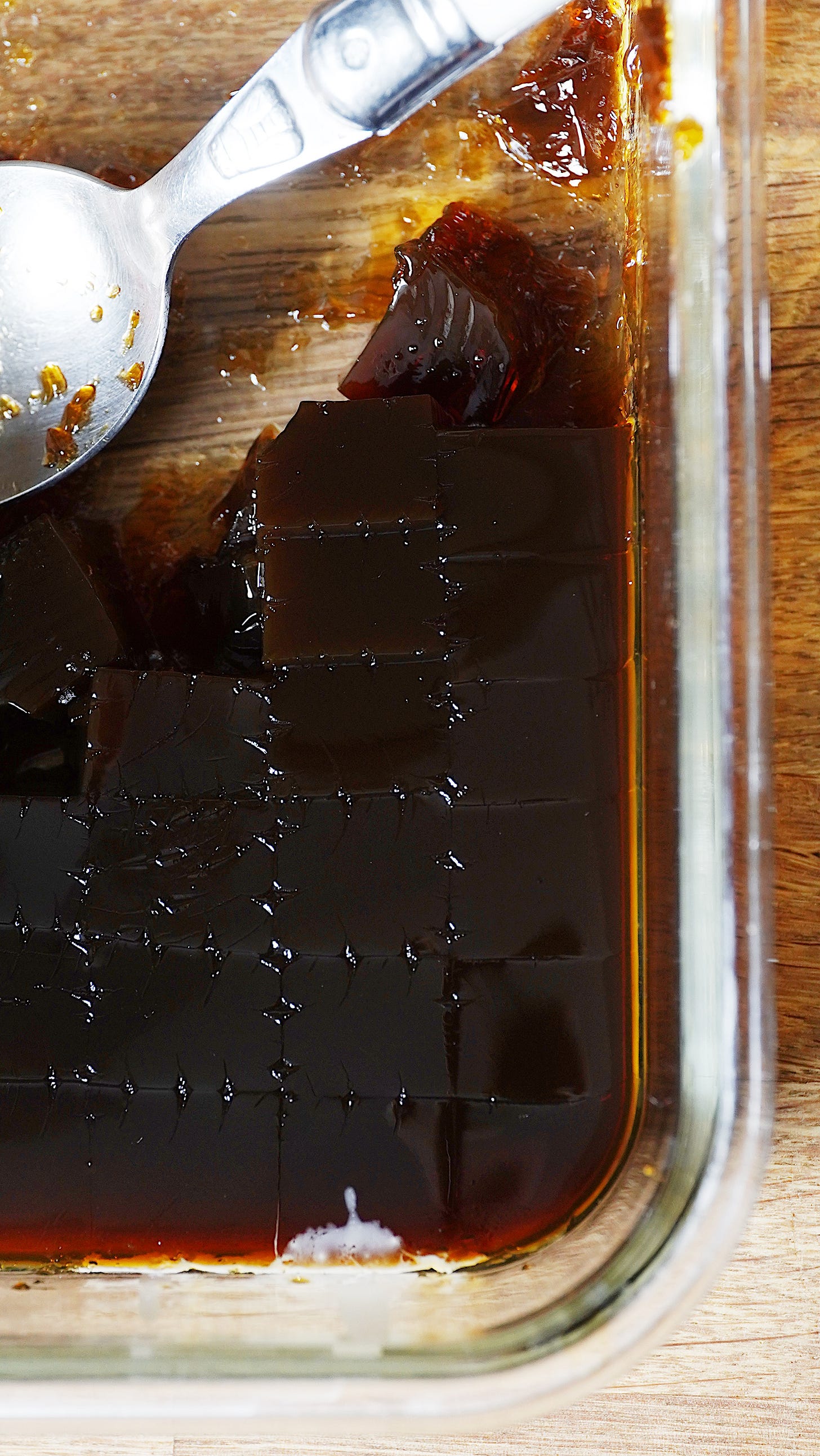
- Chill: Pour the mixture into a shallow tray or mold. Let it cool to room temperature, then refrigerate for about 3 hours until completely set.
2. Make the Coffee Blancmange
- Prep: Bloom the gelatin sheets in cold water. Brew your 225ml of drip coffee with the ground coffee beans and set aside.
- Warm: In a small saucepan, combine the heavy cream and cane sugar. Warm over medium heat until it is just about to boil, then remove from heat.
- Infuse: Pour the brewed coffee into the warm cream. Squeeze the excess water from the gelatin sheets, add them to the mixture, and stir thoroughly until fully combined.
- Cool: Place the bottom of the pan into a bowl of ice water, stirring gently until the mixture cools down to room temperature.
- Set: Pour the cream mixture halfway up into four serving glasses. Refrigerate for about 3 hours until firmly set.
3. Assemble and Serve
- Combine: Once both layers are completely chilled and set, gently break or scoop the dark coffee jelly and layer it generously on top of the set coffee blancmange glasses.
Next week, we are making a beloved Japanese picnic classic: Inari Sushi.
These sweet, juicy fried tofu pockets stuffed with perfectly seasoned sushi rice are the ultimate finger food. We’ll be sharing the secrets to getting that perfect balance of sweet and savory juice in every bite, plus some fun ways to dress them up. You won’t want to miss this one!Until then, happy cooking.
Love,
Kiki and Coco


Member discussion