



Welcome to the commemorative first issue of DECODED.
Born and raised in Japan, we now live in the vibrant heart of Berlin as Japanese Food Consultants, chefs, and recipe creators. This newsletter is born from our unique background—a space where we cast a multi-dimensional spotlight on Japanese cuisine and the rich culture and recipes hidden behind it, "decoding" them for you.
Through social media, we’ve received countless requests from people living abroad. One topic, in particular, has captured everyone's imagination: the depiction of food in anime. Even for scenes that seem commonplace to us as Japanese people, many wonder: What exactly is that dish?
For our first issue, we’ve chosen to decode Witch Hat Atelier, the masterpiece that finally received its long-awaited anime adaptation in 2026.
Specifically, we are focusing on a dish that colors the daily life of the protagonist, Coco, in the early stages of the story (a detail added for the anime that doesn't appear in the original manga). We will explore the identity and recipe of Cream Stew—a quintessential Japanese home-cooked dish that evolved in its own unique way from European roots.
(A quick side note: Our co-writer's name is also COCO! We promise not to let the two Cocos get mixed up—though both are equally magical in their own way! Haha.)
We hope you enjoy this journey to the end.
The Origins of Cream Stew
Cream Stew is a prime example of Yōshoku—Western-style dishes that were uniquely nurtured and "Japanized" over time.
Its roots trace back to the late 1940s, when 'White Stew' first appeared in school lunches to support the healthy growth of children. To bring this same warmth into every home, House Foods released the first commercial stew roux in 1966. Almost overnight, it became a beloved staple, cherished as the definitive 'taste of home.'
While Japanese manufacturers looked to European stews for inspiration, they spent years of trial and error to perfect a roux that suited the Japanese palate. Nearly 60 years later, it remains a beloved staple on the family table.
The Culture of "Stew" in Japan
In Japan, there are two contrasting types of stew. One is Beef Stew, which was established in 17th-century France as a "ragout" and became a staple of high-end Western restaurants in Japan during the Meiji era. The other is Cream Stew, which grew within the Japanese home.
Even today, while you can find Beef Stew at many restaurants, Cream Stew is rarely found on menus. Because of this, Japanese people tend to associate Cream Stew with "warm family gatherings." I remember the feeling of coming home from school or work, catching the scent of stew drifting from the front door, and feeling an instant sense of relief. No matter how bad a day was, this bowl of stew meant you were home, protected, and loved.
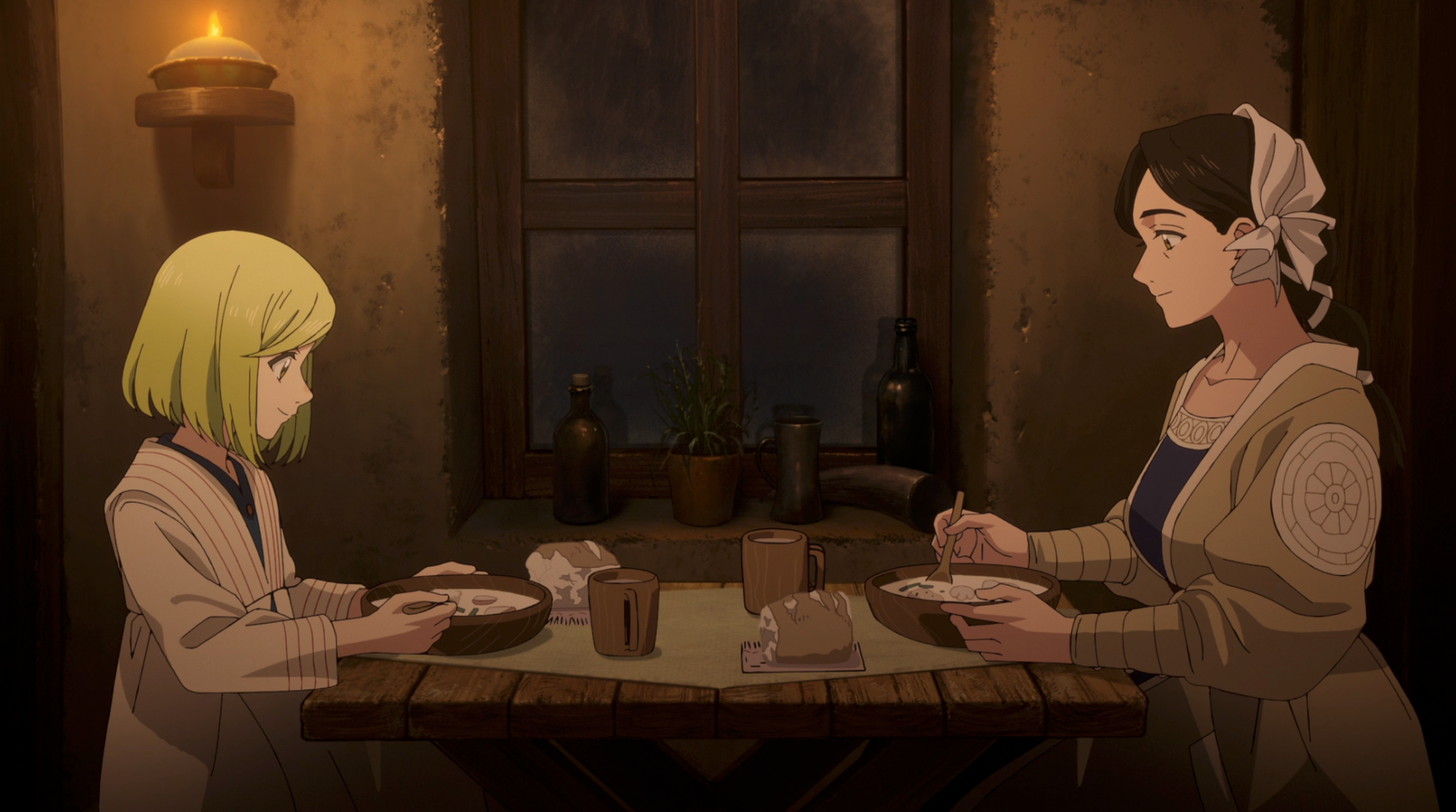
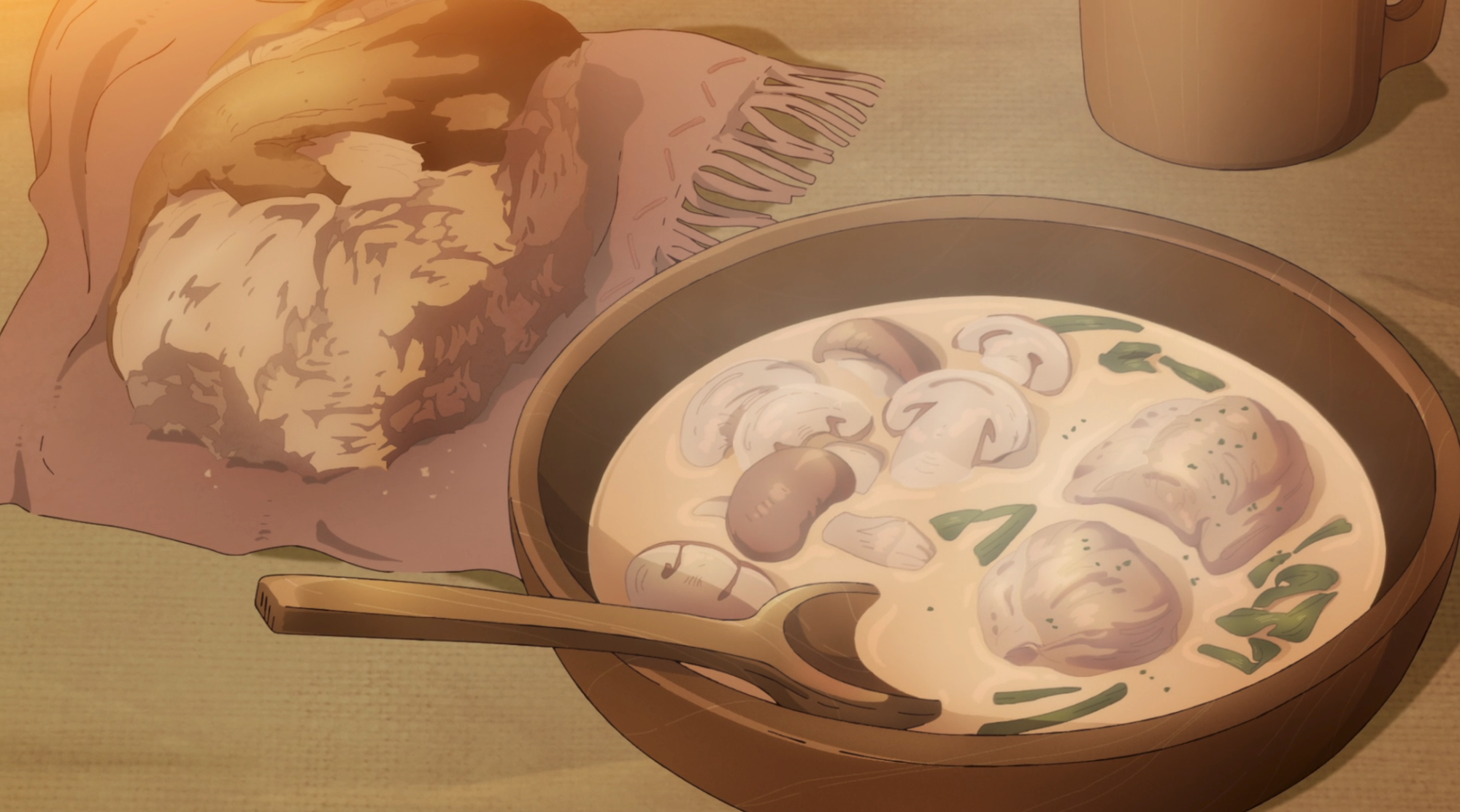
Visual Cues: Decoding the Dish
In the anime's visuals, the stew Coco eats features large chunks of chicken thigh, brown mushrooms, and deep greens that look like wilted spinach. It is a simple presentation, but one that feels like it maximizes the umami of the chicken and fungi.
(For context: A standard Japanese Cream Stew is a colorful, busy affair—orange carrots, yellow potatoes, green broccoli or parsley, all bound together in a thick, hearty roux.)
The ingredients of a stew likely changed based on the day. Looking back at my own memories, my mother’s stew would sometimes be a "clear out the fridge" meal, and other times, the star of a celebration.
As a child, I took this bowl for granted. Coming home to a delicious meal was just… normal. I didn't have the words "gratitude" or "warmth of the family table" back then. It was only after leaving home and moving to a foreign land that I truly began to feel the weight of my mother’s cooking.
Now that I am a mother myself, I find myself thinking: "What should I feed them today?" "Did they have enough vegetables yesterday?" "It’s cold today, let’s make something to warm them up." Standing in the kitchen and wishing for the well-being of your family might look like a routine chore, but it is actually a deeply sacred and loving act. I’m certain Coco’s mother felt the same.
The stew Coco and her mother shared was a form of protection. When Coco’s life changes drastically, the memory of that warm bowl might feel cruel in its absence. But I believe that stew was an invisible "talisman" (omamori)—a final gift from a mother to her daughter.
Let’s Make Cream Stew
For those of us living in Berlin, Japanese "stew roux" blocks are precious items sold at shocking prices in Asian supermarkets. (I still remember the sticker shock when I first moved here!)
However, with butter, flour, and a few pro-tips, you can "summon" that nostalgic Japanese flavor without relying on store-bought roux.
In the online cooking classes I host for Japanese expats, this recipe has received overwhelming support. Students often tell me, "I never need to buy roux again!" or "I’m so happy I can taste home even while living abroad." Just as the mother’s craftsmanship filled young Coco’s heart, why not recreate the "heart-warming memories of home" in your own kitchen?
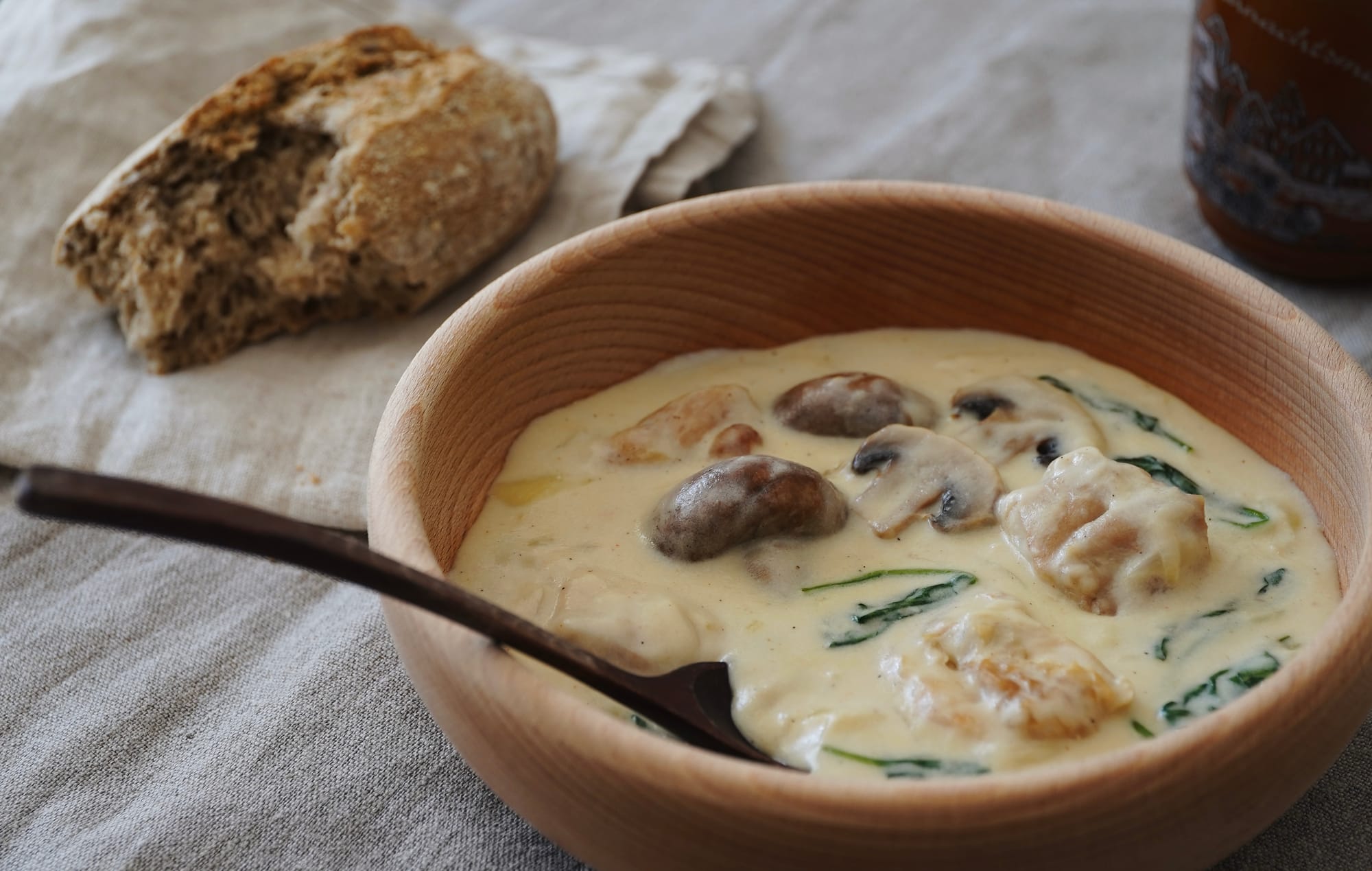
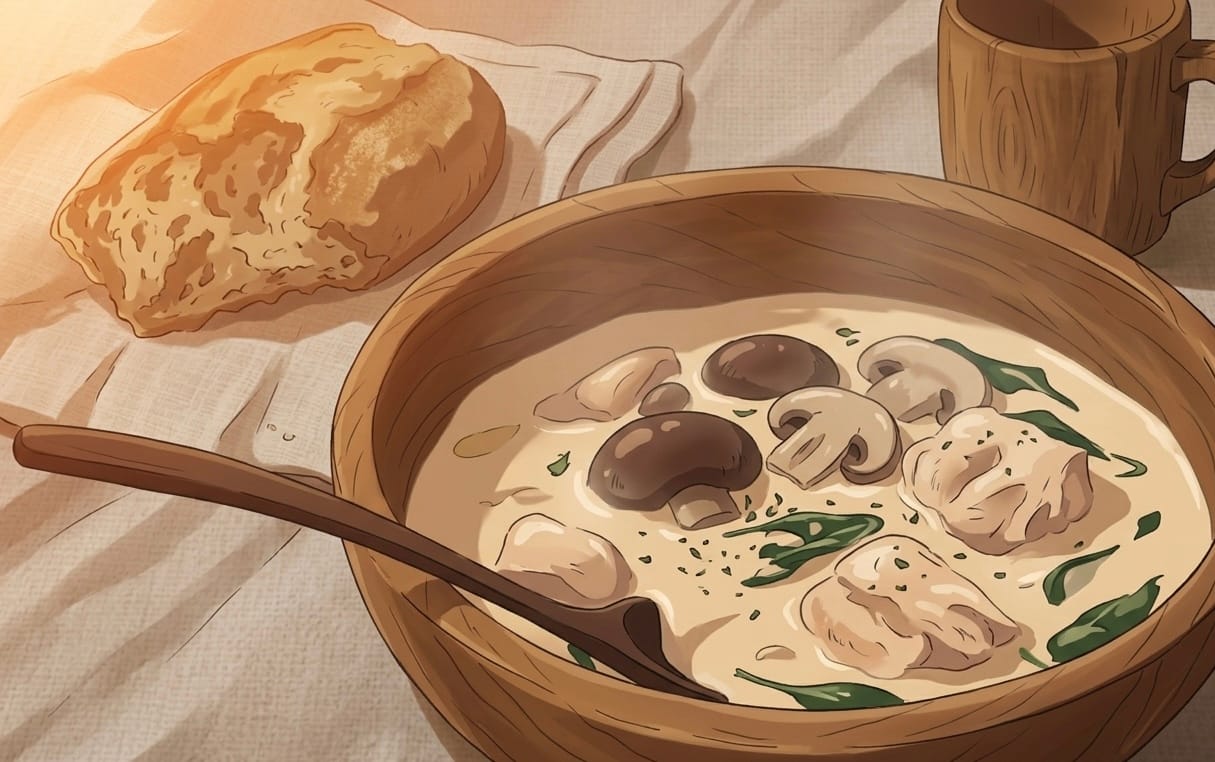
Left: Reality (The Result) / Right: My dish reimagined in Anime style.
Japanese Cream Stew
Serves 3
- 350-400g chicken thighs, skin-on or skinless, your preference
- 1 medium onion, thinly sliced
- 5 large brown mushrooms, halved
- 1 handful baby spinach, salad-ready
- 35g unsalted butter
- 700ml whole milk
- 2 tbsp all-purpose flour, or rice flour for a gluten-free option
- 1 dried bay leaf
- Fine sea salt, to taste
- Ground white pepper, to taste
- 1 tsp (or more) white miso, optional, for added depth and umami
- Preparation: Cut the chicken thighs into bite-sized pieces and season with salt (1% of the meat's weight). Let it sit for 10 minutes to draw out the umami. Thinly slice the onion along the grain, and cut the mushrooms in half. Rinse the baby spinach and set aside.
- Melt the butter in a pot over low heat. Add the sliced onions and 1/4 tsp of salt, stirring gently to coat. Cover with a lid and sweat for 10 minutes. This "étuver" method extracts the natural sweetness and depth from the onions, creating a rich base without the need for a pre-made roux block.
- While the onions are sweating, prepare the chicken in a separate pan. Lightly dredge the chicken in all-purpose flour (extra, not from the main 2 tbsp). Heat olive oil in the pan and sear the chicken on both sides until golden brown. It doesn't need to be cooked through yet; the goal is to create a Maillard reaction that adds extra depth to the stew.
- Add the seared chicken into the pot with the onions. Sprinkle in the 2 tbsp of flour (or rice flour) and stir well until the flour is evenly incorporated and no longer powdery.
- Gradually pour in the milk in small batches. Stir constantly to ensure the sauce is smooth and free of lumps. Once the liquid is incorporated, add the mushrooms to allow their earthy aroma to infuse the stew.
- Bring to a gentle simmer. Cook over medium-low heat for about 10 minutes, stirring occasionally to prevent the bottom from scorching. This allows the chicken to become tender and the flavors to meld perfectly.
- Season with salt and white pepper. For a deeper, more "Japanese home-style" flavor, stir in the white miso. Finally, add the baby spinach and let it wilt slightly using the residual heat. Serve immediately in a wooden bowl for the full Witch Hat Atelier experience.
- The Miso Secret: Adding white miso provides an fermented richness that replicates the complex "Japanese umami" often found in high-end Yōshoku (Western-style Japanese) restaurants.
- If using Soy Milk: To prevent curdling, avoid bringing the stew to a hard boil after adding the soy milk. Add it at the very end and heat gently until warmed through.
- Choosing Rice Flour: For a gluten-free version, I highly recommend KOMEKO's Japanese rice flour (if you live in Germany). Its ultra-fine texture ensures a silky-smooth consistency without any of the grittiness or bitterness often found in other varieties.
Thank you for joining us for the first "decoding." Do you have a food memory that you’ll never forget? We’d love for you to share it with us!
The mundane scenes in anime often hide the rich food culture and spirit of Japan. I’m already wandering through the Berlin markets, gathering inspiration for our next focus.
"What was that dish in that anime?" "I can't forget that thing I ate in Japan!" If you have any requests or comments, please let us know below. We will decode the logic behind it and deliver it to your kitchen.
To ensure you don’t miss the latest recipes and updates from our Berlin kitchen, please subscribe and follow us.
Stay tuned for the next issue!


Member discussion