



By Kiki (With moral support and editing from Coco)
When you think of Japanese food, what’s the first thing that pops into your head?
Sushi? Tempura? A steaming bowl of ramen? Let’s be honest for a second. That is not the food most of us are actually making at home on a random Tuesday. That’s the stuff we leave to the professionals while we sit at a counter and pay them to do it right. The real, soul-settling Japanese home cooking—the food that makes you exhale and feel like everything is going to be okay—is something a lot of people outside of Japan haven't really been clued into yet.
I want to change that, slowly. And we’re starting with Gyoza.
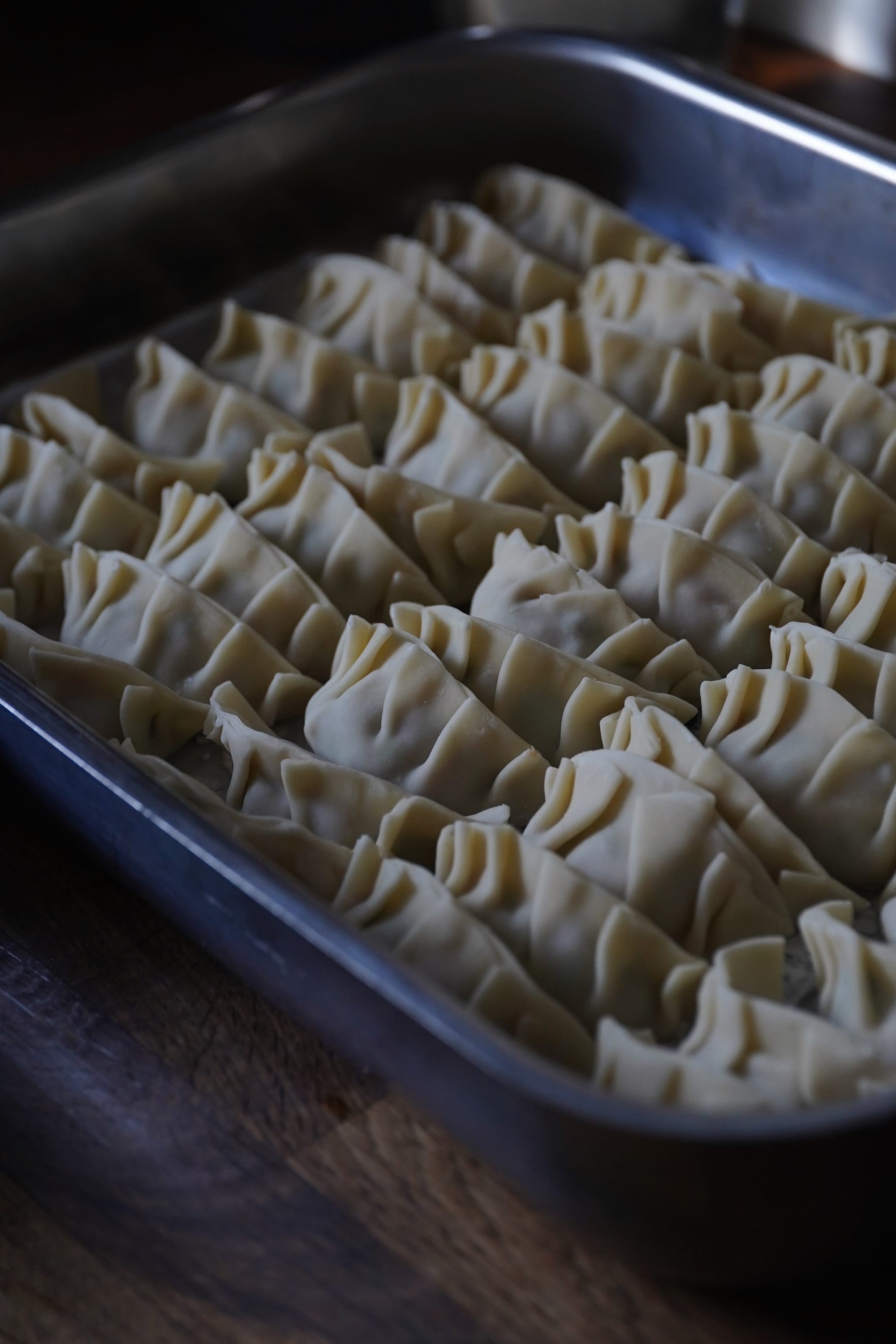
For most people outside of Japan, dumplings belong to one of two categories: a night out at a restaurant in Chinatown, or a bag of frozen things you keep in the back of the freezer for emergencies.
In Japan, yes, we grab them at casual ramen joints or buy the pre-made ones at the grocery store to fry up in five minutes. But there is this whole other world where making the filling from scratch and folding them by hand is a proper, deeply loved ritual at home.
Years ago, back when I was running Japanese cooking classes, a German student looked at me with this incredibly tender expression and said, “When I studied abroad in Japan, my host family made these incredibly crispy gyoza. I still can’t forget them.”
We spent the next ten minutes geeking out over how elite home-cooked dumplings are, but the second the conversation ended, I felt this sharp, sudden ache. I wanted my mother’s food so badly it made me dizzy.
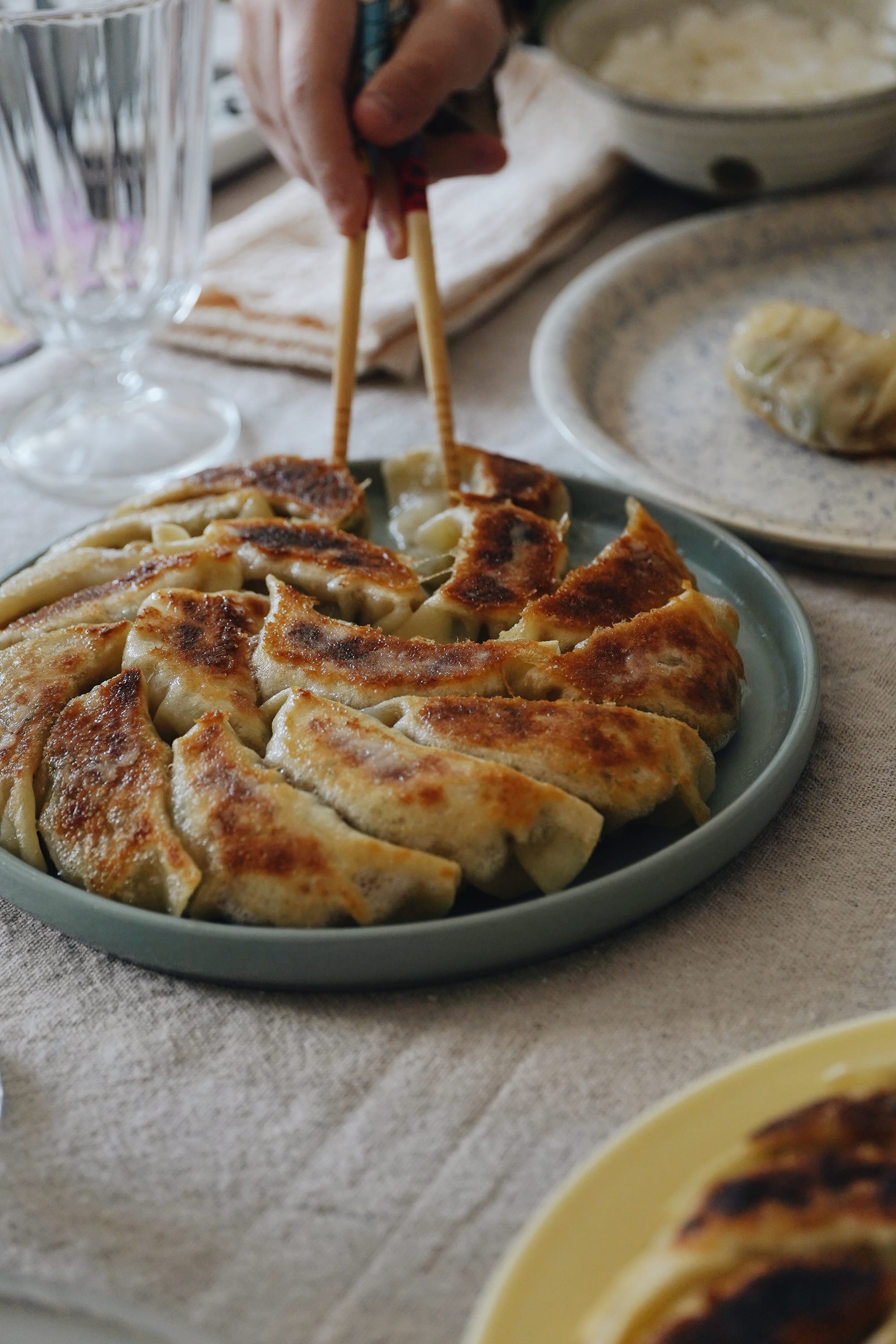
Growing up, once or twice a month, this massive electric griddle would take over the exact center of our dining table. Sometimes we did barbecue, sometimes pancakes, but the nights we did gyoza were the best nights. You’d sit there, scorched by the heat, shoving them into your mouth straight off the grill while they were still way too hot. That aggressive, beautiful SIZZLE the moment they hit the pan, the smell of toasted sesame oil and garlic filling the house—it sticks to your clothes and your hair, but honestly, who cares? That is my core memory of what a happy table feels like.
Then came 2018, and I moved to Berlin.
The homesickness hit me like a brick, specifically through food. I was already working with food for a living, but walking into the local grocery stores and seeing how limited the ingredients were threw me into a total spiral. I spent weeks staring at kitchen counters, genuinely stressed, thinking, What am I even supposed to cook here? What can I even make?
Whenever the panic got too loud, I’d walk down to the Asian grocery store, grab a pack of wrappers and a bundle of garlic chives, and come home to build gyoza in total silence. There is something deeply therapeutic about the repetitive motion of sealing dough with your thumbs. The loneliness just kind of dissolves into the flour. Knowing I had a plate of these ready to fry gave me this ridiculous sense of security. I don't even know how many times gyoza saved my mental health in that apartment. Thank you, seriously.
Now, dumplings originated in China—usually boiled as shui jiao, which I also fiercely love—but the Japanese version has evolved into its own distinct, crispy beast. We steam-fry them with a splash of water, then let the bottoms get intensely gold and crunchy. It’s a national obsession for a reason.
You get that shattering, ultra-thin crust, a filling heavy on garlic and chives, and a quick dip in soy sauce, rice vinegar, and chili oil. Then you shove it in your mouth and immediately follow it with a massive bite of plain white rice. Is it a little risky to eat this much garlic before a meeting or a date? Sure. Do we care? Not even a little.
If you want to get analytical, you’ve got carbs in the wrapper, protein in the pork, and fiber in the greens. It’s basically a balanced meal inside a single dough pocket (though as a Japanese person, I will still tell you the bowl of rice on the side is non-negotiable). Plus, in this current era of everything being stupidly expensive, making these from scratch is cheap, accessible, and deeply satisfying. And sure, in a perfect world, we’d probably make the wrappers from scratch, too—but honestly? Hardly anyone in Japan actually does that nowadays (we love the store-bought convenience, let's be real)
Anyway, I’ve talked enough. Don't stress about making them look like a picture on the internet. Your pleats can be ugly. Perfect is boring. What matters is getting that pork properly seasoned, hitting that glorious crunch on the bottom, and eating them while they're hot enough to burn your tongue.
Ready to make some Gyoza?

- 280g minced pork
> ✍️ KIKI's Note: If you’re buying pork in a country where the meat leans super lean (like here in Germany), it can get sad and dry. If your pork looks lean, you must add 1 tbsp potato starch, 2 pinches of sugar, and optionally 10g lard to cheat your way to juiciness. If you scored properly fatty pork, skip the starch and lard. - 2 pinches sea salt (for the meat)
- 1 clove ginger, grated
- 1 clove garlic, grated (optional, but highly recommended)
- 1 tbsp soy sauce
- 1 tbsp toasted sesame oil
- 1 tbsp Japanese sake (or water, if you don't have it)
- A pinch of black pepper
- 200g Napa cabbage (or regular green cabbage), finely chopped
- 30g garlic chives (Nira), finely chopped
- 35 gyoza wrappers
- Neutral vegetable oil (for frying)
- Extra toasted sesame oil (for the grand finale)
1. Prep the greens Finely chop your cabbage and garlic chives. Set them aside.
2. Work the meat In a large bowl, dump your pork and those 2 pinches of sea salt. Put away the fork—use your bare hand for this. Mix and knead it vigorously until the pork turns slightly pale, tacky, and starts sticking to the side of the bowl.
3. Seasoning drama Add all your flavorings—the ginger, garlic, soy sauce, sake, sesame oil, black pepper, and your "lean meat rescuers" (the starch, sugar, and lard if your pork needs the help). Knead quickly just until everything is beautifully combined. Drop in the chopped cabbage and chives, and fold them in until evenly distributed. Don’t overwork it once the greens are in.
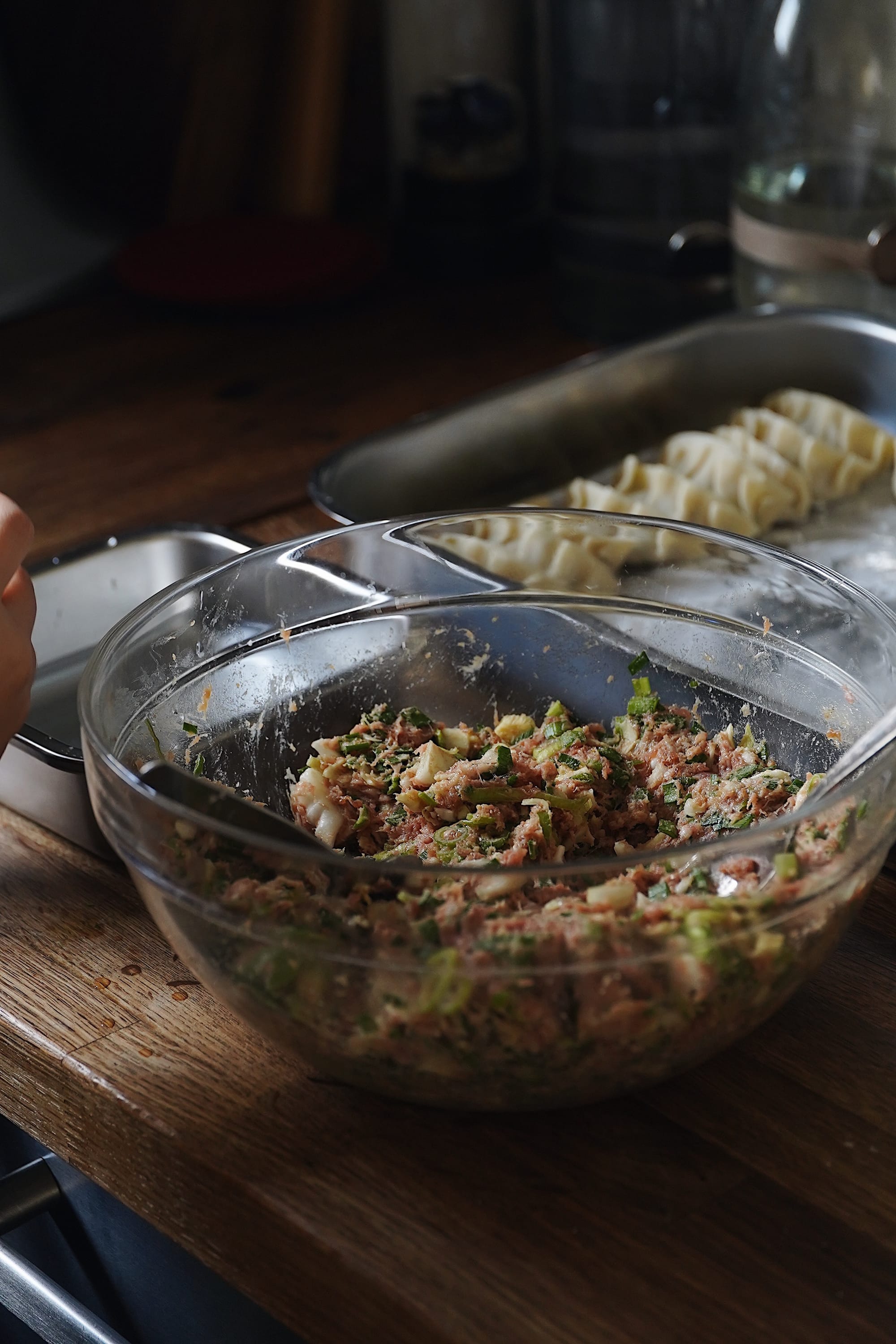
4. The fold Put a wrapper in your palm, place a scoop of filling right in the center (size it according to your wrapper), and pleat it into whatever shape makes you happy. Pinched, folded, messy—it’s all good.
5. Get that sizzle Pour a good splash of vegetable oil into your skillet or frying pan and arrange your dumplings. Turn the heat to medium and let them fry until the bottoms get a gorgeous, golden-brown crust.
6. The steam and the crisp Once you’ve got color on the bottom, pour enough water into the pan so it comes about halfway up the dumplings—it’s going to hiss fiercely—and slap a lid on it immediately. Let them steam on medium for about 3-4 minutes until the water is almost entirely gone and the inside is cooked through.
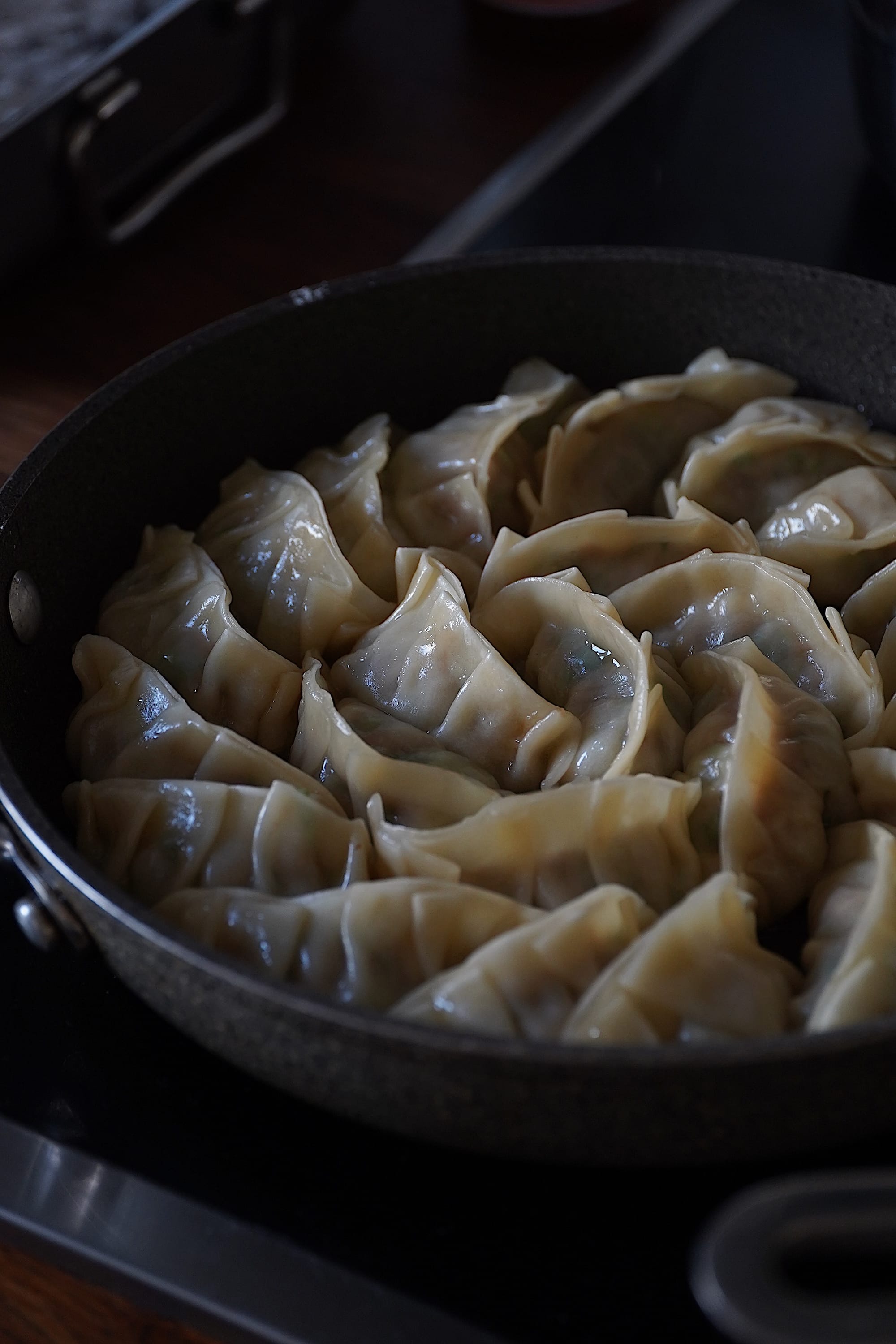
Take the lid off. Let whatever moisture is left evaporate. Once the pan is dry, drizzle a little more sesame oil down the sides of the pan so it runs underneath. Let them fry for another minute until the bottoms sound sharp, crackling, and shatteringly crisp.
Flip them onto a plate, get your rice, and eat them immediately.
We hope you like it!
See you next week, and let me know if you make these!
Love, Kiki and Coco
(P.S. If you loved this little trip to Kiki's Japanese family table, hit subscribe so you never miss the next bite. )


Member discussion